
Best Time for Proposal Photos by Season
Double-click to edit...
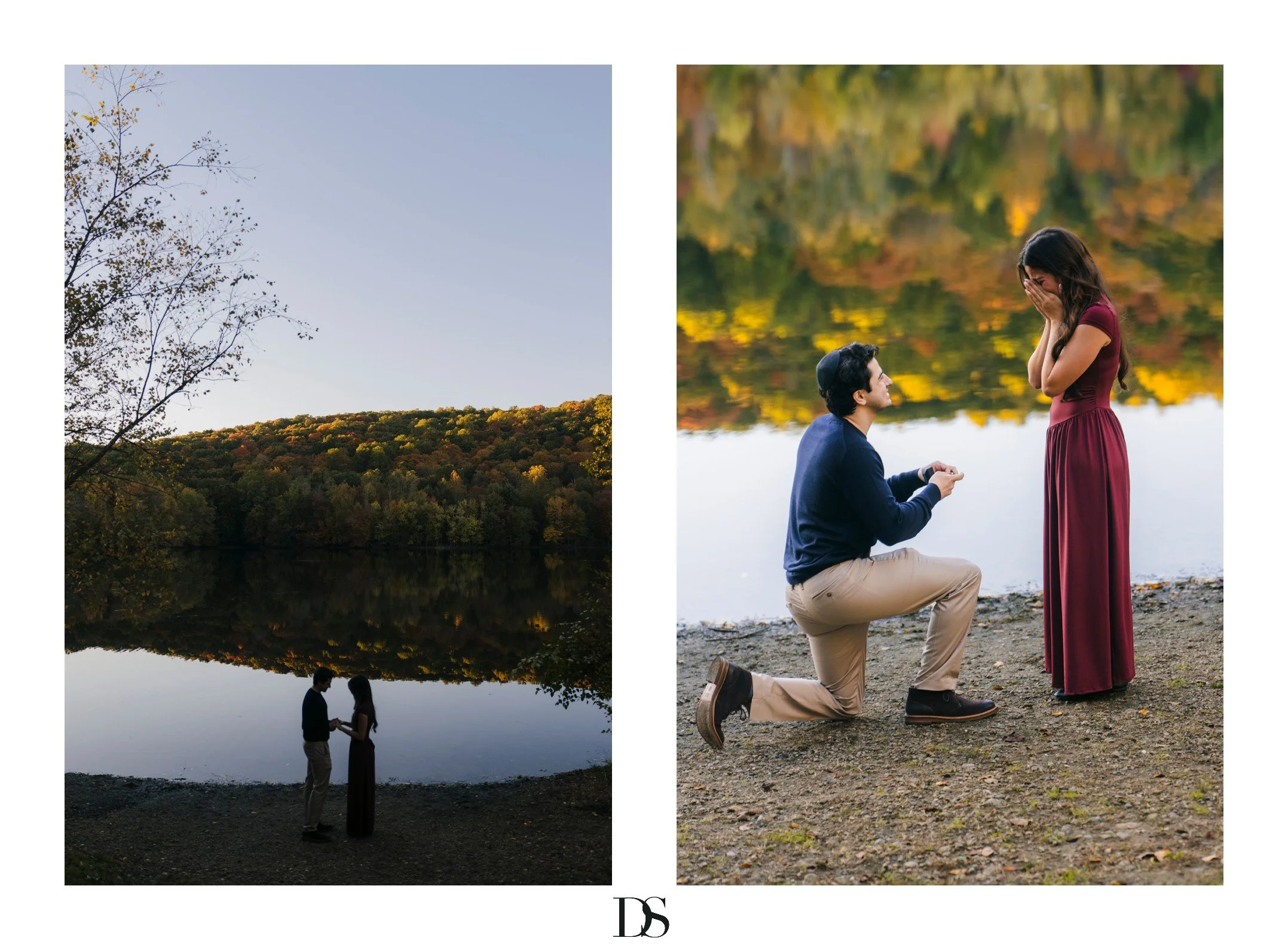
A proposal lasts only a few seconds, but the feeling around it has a rhythm: the walk toward the spot, the moment you recognize what is happening, the deep breath before the question, and the celebration afterward. The best time for proposal photos is the time that gives that entire story room to unfold, not simply the moment with the prettiest sky.
For most couples, that means balancing beautiful light with privacy, weather, location access, and the plan that makes the surprise believable. A thoughtful schedule lets you stay present with each other while your photographer quietly preserves the real reaction, the nervous laughter, and the just-engaged joy that follows.
How to Choose the Best Time for Proposal Photos
Golden hour, the period shortly after sunrise or before sunset, is popular for a reason. The light is soft, flattering, and dimensional. It adds warmth to skin tones, helps a skyline or shoreline feel luminous, and creates the polished editorial quality many couples love without making portraits feel overly posed.
Even so, sunset is not automatically the right answer. A sunset proposal at a crowded overlook can leave little room for a private moment. In midsummer, the last light may arrive quite late, which can be difficult if you have dinner reservations or family waiting to celebrate. In winter, sunset comes early, and a 4:30 p.m. proposal can feel unexpectedly rushed if everyone is still commuting.
The strongest plan begins with the experience you want. If you picture a quiet question on the beach followed by a relaxed walk in the sand, early morning may be ideal. If you want city lights, cocktails, and a dinner celebration immediately afterward, an evening proposal with a short portrait session at blue hour may fit beautifully. The right timing should support your relationship and your plans, rather than force you into someone else’s version of a perfect proposal.
Plan the proposal 30 to 45 minutes before sunset
For outdoor proposals, this is often the sweet spot. Arriving about 30 to 45 minutes before sunset gives you soft, flattering light for the proposal itself and enough time for natural portraits afterward. You will have daylight for the reaction and the first few celebratory photos, then the richer color and glow that arrives as the sun gets low.
This timing also protects the pace of the moment. You do not need to rush through the proposal, immediately turn toward the camera, and feel as if you are on a schedule. Take a minute. Hug. Call a parent if that feels right. Let the excitement settle in before moving into a few gently guided portraits.
At Delgado Studios, Joseph plans for those in-between moments as carefully as the question itself. The goal is not to interrupt a real memory with a photoshoot. It is to give you calm direction when you want it, then let the energy of the moment lead.
Consider sunrise for privacy and a quieter setting
Sunrise can be one of the most beautiful and overlooked choices, especially at the Jersey Shore, in parks, and at well-known New York City locations. The light is gentle, the atmosphere is peaceful, and popular places are often far less crowded than they are later in the day.
There is a practical trade-off: getting ready early takes commitment, and a morning plan needs a believable reason for your partner to be out the door. A coffee walk, a weekend beach stroll, or a planned breakfast can make it feel natural. For couples who value privacy over a sunset crowd, it is often more than worth the early alarm.
Think Beyond the Light
A beautiful photo depends on more than the direction of the sun. Crowds, weather, travel time, and the layout of a location can have just as much impact on how the proposal feels.
In a busy public space, a weekday often offers a more relaxed experience than a Saturday afternoon. A proposal near a landmark may work best just before the busiest time rather than directly in the middle of it. For a city setting, a photographer can also help identify a nearby quieter corner for the question, followed by portraits with the skyline, architecture, or street energy you had in mind.
Weather deserves a thoughtful backup plan, especially in the Northeast. Overcast skies can be incredibly flattering and romantic, with soft light that photographs beautifully. Light rain can work too, particularly in an urban setting with umbrellas, reflections, and an intimate feeling. But high winds, thunderstorms, or extreme cold can make it hard to stay comfortable enough to enjoy the moment.
A flexible proposal plan is not less romantic. It is simply prepared. Choose a backup location nearby, build a little space into the day, and communicate openly with your photographer about what matters most to you. If the weather shifts, you will have options without turning the surprise into a stressful production.
Seasonal Timing for Proposal Photos
Every season has its own advantages, and the best choice often comes down to the kind of atmosphere that feels most like the two of you.
Spring
Spring brings soft greens, flowering trees, and comfortable temperatures, but it can also bring unpredictable rain. Late afternoon proposals work well as days become longer, especially in gardens, parks, and waterfront areas. Keep an eye on crowds around peak blooms, since the most photogenic spots can become busy quickly.
Summer
Summer is ideal for beach proposals, long evenings, and celebrations that continue outdoors. The challenge is heat and late sunsets. For a shore proposal, consider early morning for quiet beaches or plan the question about 45 minutes before sunset, when the light is still bright enough to capture the setting and the temperature is beginning to ease.
Fall
Fall is often a favorite for proposal photos because the color, weather, and earlier sunsets make planning easier. A golden-hour proposal can happen before dinner, leaving the evening open for a reservation or a surprise gathering. Popular foliage locations fill up on weekends, so a weekday or morning plan can make the experience feel more personal.
Winter
Winter proposals can feel especially cinematic, whether you are planning in the city, at a decorated estate, or in a meaningful indoor space. The early sunset is helpful for evening plans, but temperatures drop quickly. Keep outdoor portraits concise, choose a location with shelter nearby, and consider warm layers that still feel like you. A winter proposal does not need an hour outside to tell a complete story.
Give Yourselves Time After the Question
One of the easiest mistakes is scheduling the proposal too tightly around the next event. If you have a dinner reservation, family reveal, or private celebration planned, leave enough room after the question for 20 to 30 minutes of portraits and travel time.
Those first minutes are often the most meaningful. Your expressions are unguarded, you are still processing what just happened, and there is no need to manufacture excitement. A few simple prompts can create photographs that feel natural and refined: walking together, taking a breath, looking at the ring, or sharing the details of how the proposal came together.
If friends and family are waiting nearby, plan the reveal after a few portraits rather than immediately after the proposal. This gives you a brief pocket of time that belongs only to the two of you. Then the celebration can open up in all the ways it should.
A Beautiful Plan Should Still Feel Like You
The best proposal photos do not come from copying a viral setup or chasing one exact kind of light. They come from a plan that lets your partner feel loved, surprised, and fully present. Choose the time of day that supports the setting, the season, and the celebration waiting on the other side of yes.
When the plan feels true to your relationship, the photographs will carry more than a beautiful backdrop. They will bring you back to the way it felt to finally ask.