
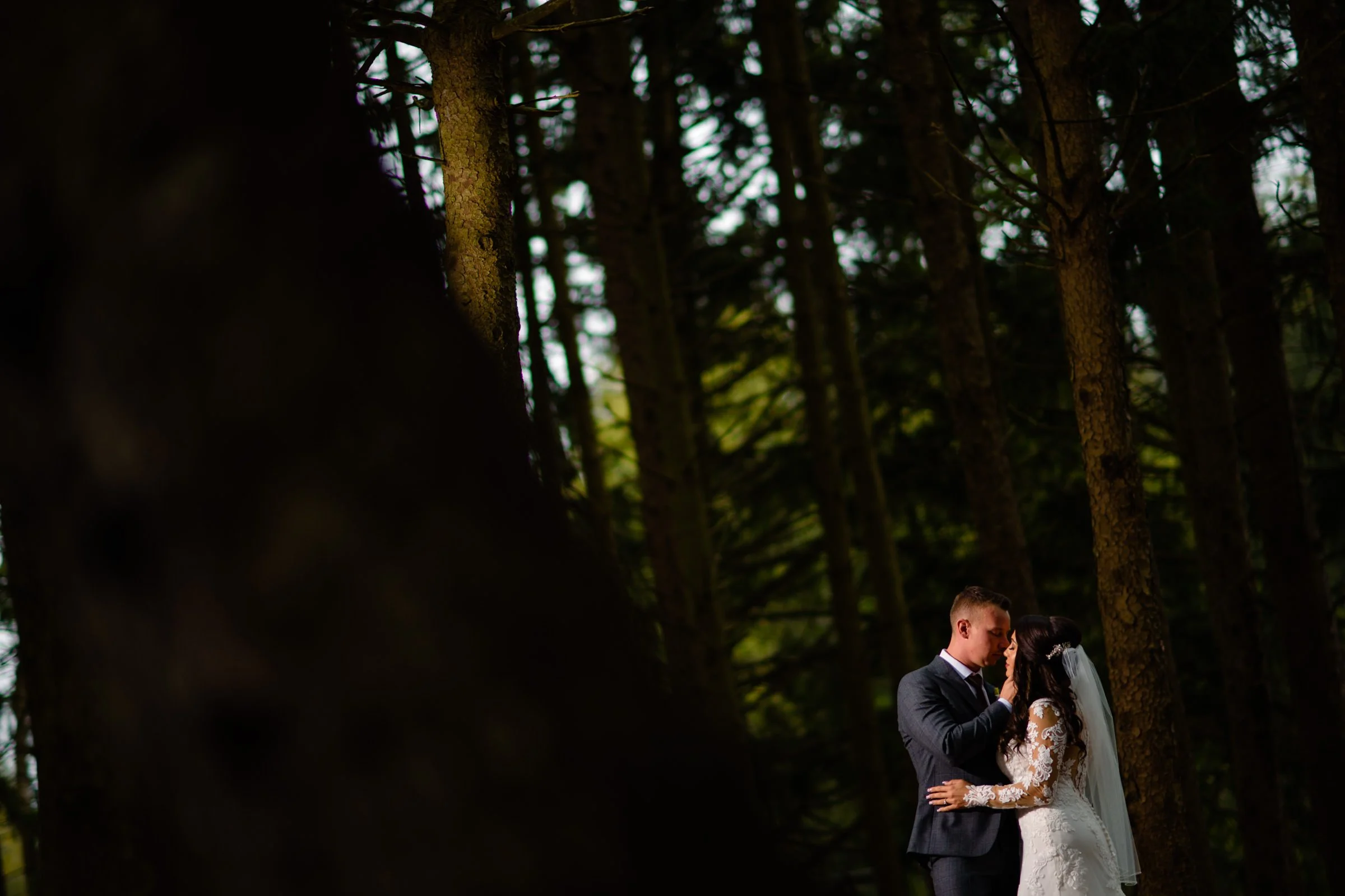
The first quiet minutes after your ceremony can feel surprisingly big. You have just promised yourselves to each other, your favorite people are celebrating nearby, and suddenly there is a camera pointed your way. Relaxing during wedding portraits is not about pretending you are naturally comfortable being photographed. It is about having a calm, clear experience that lets you focus on each other instead of wondering what to do with your hands.
The best portraits do not require you to perform. They make room for the real feeling of the day: the just-married relief, the nervous laughter, the private glance that says, “We did it.” With thoughtful planning and gentle direction, portraits can become one of the few pauses you get to share together.
Start with a timeline that gives you room to breathe
Portrait anxiety often begins before the camera comes out. When the schedule is too tight, every photo can feel like another task standing between you and cocktail hour. A realistic timeline changes that completely.
Talk with your photographer and planner about the time your venue truly allows for getting ready, travel, family portraits, wedding party photos, and couple portraits. Build in small buffers for a delayed shuttle, a bustle that needs a second try, or the simple fact that loved ones take a minute to gather. Those extra minutes are not wasted. They protect the unhurried feeling that shows in your photographs.
Many couples choose a first look because it gives them a private moment together and allows for many portraits before the ceremony. Others care deeply about seeing each other for the first time down the aisle. Both choices can lead to beautiful, relaxed images. If you are waiting until the ceremony, your photographer can shape a post-ceremony plan that feels efficient without feeling rushed. The right choice is the one that feels true to you.
Choose a photographer whose direction feels natural
You do not need to arrive knowing how to pose. In fact, most people do not. What matters is working with someone who can read the energy of a moment, offer clear guidance, and then step back when the connection is already there.
Good direction is simple and specific. You may be asked to stand near a window, turn toward the light, walk slowly together, or take a breath and look at your partner. These are prompts, not a test. You should never feel as though you need to memorize a list of poses or hold a smile until it feels unnatural.
At Delgado Studios, Joseph personally photographs each celebration, so clients have one consistent creative partner from the planning conversation through the wedding day. That familiarity helps replace uncertainty with trust. You know who will be guiding you, anticipating changing light, and noticing when you need a quick reset.
Let the camera catch the in-between moments
Some of the most lasting portraits happen just after the “official” frame. It may be the moment you fix your partner’s jacket, laugh because a veil catches the wind, or whisper something you would rather not say in front of a crowd. Do not be afraid to move, talk, or react.
A polished portrait can still feel alive. The goal is not to create a gallery of identical smiles. It is to make photographs that feel like you at your most present, surrounded by the beauty and significance of your day.
Make your portrait time feel like time together
It helps to reframe portraits as a short pocket of privacy rather than an interruption. For many couples, it is the first chance to absorb what has happened without being pulled in six different directions.
Stay close. Hold hands while you walk between locations. Take a second to look at your rings, your flowers, or the room where you will celebrate. If you are feeling overwhelmed, say so. A seasoned photographer can slow the pace, simplify the next setup, and help you return to the moment.
You also do not have to fill every second with conversation. Quiet works beautifully in photographs. A deep breath, a shoulder lean, or a few seconds with your foreheads together can feel more natural than trying to manufacture a big expression on cue.
Prepare the details that can create unnecessary stress
A little preparation lets you stop thinking about logistics once the day begins. Wear shoes you can comfortably stand or walk in for part of the day, even if you change into your ceremony shoes for photographs. Ask someone you trust to keep a small touch-up kit nearby with lipstick, blotting papers, fashion tape, water, and anything else that helps you feel like yourself.
If you have a dress with a long train, a veil, or a sentimental accessory, practice handling it once before the wedding day. Your photographer will help arrange these pieces, but familiarity makes you less worried about every movement. The same goes for a boutonniere that shifts or a jacket that needs adjusting. These are normal details, not disasters.
Consider the weather, too, especially for Northeast weddings. Wind, summer humidity, unexpected rain, and early sunsets are all workable when there is a plan. A beautiful indoor option, a clear umbrella, and a photographer comfortable with low light can turn an uncertain forecast into images with character. The trade-off is that flexibility often matters more than chasing one exact Pinterest-style location or pose.
Keep family portraits organized and brief
Family photos can be meaningful, especially when generations have gathered for your wedding. They can also become the most stressful part of the portrait schedule if no one knows where to be.
Before the wedding, make a focused list of the groupings that matter most. Include names when family dynamics are complex, and designate one relative on each side who knows everyone and can help gather people quickly. Aim for essential combinations rather than every possible variation. You can always take a spontaneous photo with an aunt or college friend later in the evening when it feels more relaxed.
Once the immediate family portraits are complete, let your photographer guide the transition back to couple and wedding party photos. Knowing that your family has been cared for makes it easier to be fully present for the next part of the day.
Stop chasing perfection in every frame
The pressure to look flawless can make anyone stiff. But the details you may notice in the moment are rarely the details that define the photograph later. A loose curl, a gust of wind, a laugh that crinkles your eyes, or a slightly crooked bow tie can become part of what makes the image feel personal.
There is a difference between polished and overly controlled. Your photographer will pay attention to composition, light, posture, and the small adjustments that create a refined result. You do not need to carry that responsibility, too. Let yourself be guided, then return your attention to your partner.
If there is something you are genuinely self-conscious about, share it before the wedding. A thoughtful photographer welcomes that information and can photograph you with care. Just try not to give yourself the impossible assignment of approving every angle while you are living one of the biggest days of your life.
A few simple ways to relax during wedding portraits
When nerves rise, small actions can bring you back to the moment. Take one slow breath before a new set of photos. Put your hands somewhere purposeful, such as around your partner’s waist, on their lapel, or holding your bouquet naturally. Look at your partner instead of the camera when you need a break from feeling observed.
Give yourselves permission to laugh. Weddings are full of minor surprises, and your shared reaction is often more beautiful than a perfectly composed expression. If you need water, a moment in the shade, or two minutes alone, ask. The strongest portrait experience is collaborative, not something you have to endure.
Your wedding photographs should remind you how the day felt, not how hard you worked to look relaxed. Trust the preparation, stay close to the person you came to marry, and let the rest unfold. The camera will take care of the memory while you get to be in it.