
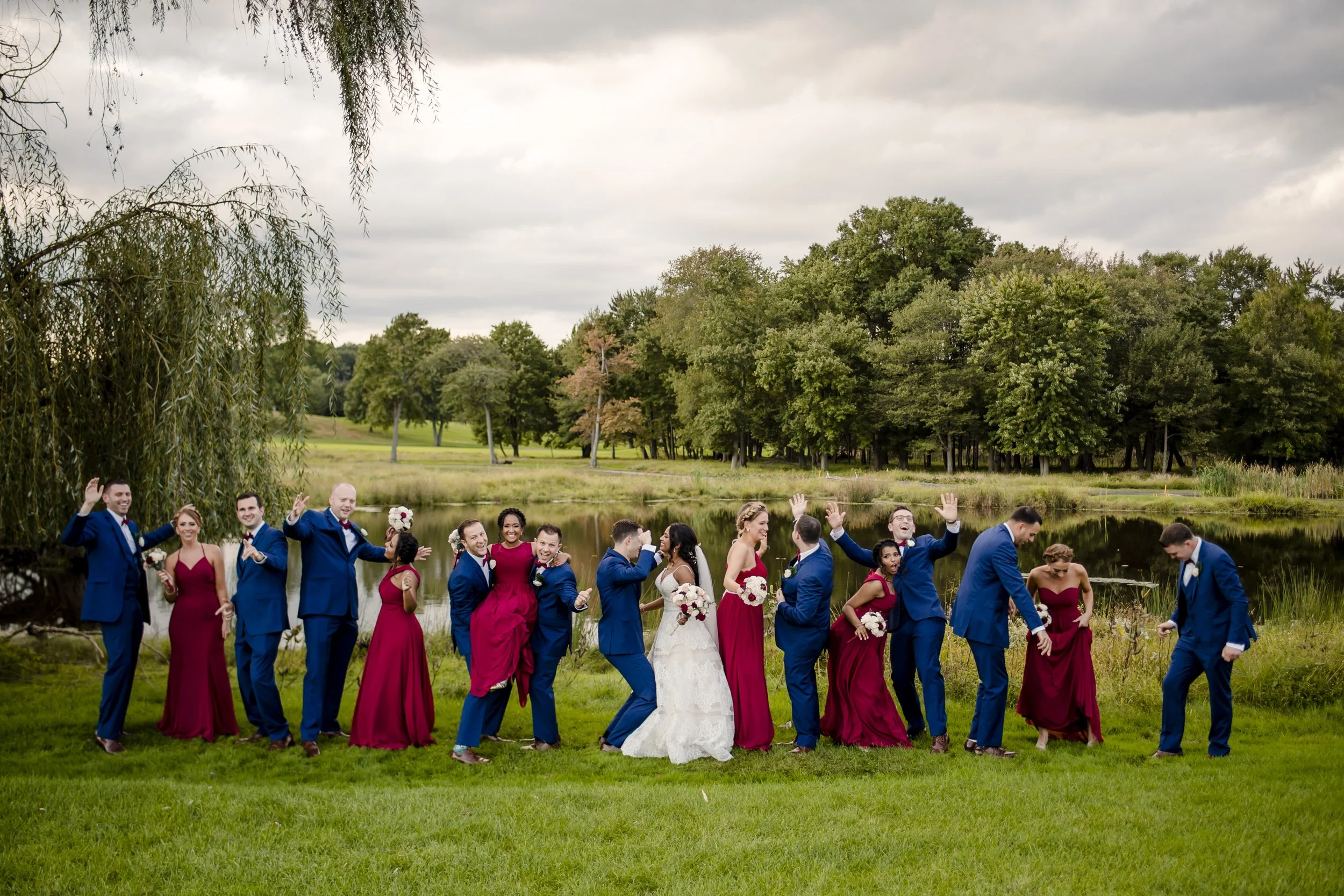
The moment your partner sees you for the first time, your grandmother reaches for your hand during the ceremony, the room erupts during the reception toast - none of it waits for a perfect pose. The right new jersey wedding photographer knows how to recognize those fleeting moments while creating portraits that feel natural, polished, and entirely like you.
Wedding photography is not simply about choosing someone whose images look beautiful online. It is about trusting a person with a day that moves quickly, carries real emotion, and cannot be recreated. You deserve photographs with style, certainly, but you also deserve a calm presence, clear guidance, and the freedom to actually experience your wedding.
Choose a Style That Feels Like Your Day
Before comparing packages or asking about availability, look closely at how a photographer tells a full wedding story. A strong portfolio should show more than dramatic portraits in ideal light. Look for quiet anticipation while getting ready, the movement of a ceremony processional, candid reactions from family, a packed dance floor, and the small details that make the celebration yours.
Many couples are drawn to a blend of candid documentary photography and refined editorial portraiture. It offers the best of both approaches: honest images that preserve the feeling of the day, along with artful portraits you will be proud to frame. The goal is not to turn your wedding into a photo shoot. It is to make space for photographs that feel elevated without pulling you away from the people you came to celebrate with.
Style also needs to hold up across different settings. A New Jersey wedding might begin in a sunlit hotel suite, move to a historic church or waterfront ceremony, and end in a dimly lit ballroom. Ask to see complete galleries from celebrations with conditions similar to yours. Consistency in bright sun, rain, candlelight, and reception lighting says far more than a carefully selected highlight reel.
What a New Jersey Wedding Photographer Should Handle
New Jersey weddings often come with full timelines, close-knit family dynamics, multiple locations, and venues that require quick adjustments. Your photographer should be ready for all of it. That means arriving prepared, communicating clearly with your planner and venue team, and understanding how to work efficiently when the schedule shifts.
Lighting is one of the most overlooked parts of the experience. Beautiful photographs are not dependent on perfect weather or a bright reception room. An experienced photographer knows how to use window light, create flattering portraits outdoors at different times of day, and photograph a lively dance floor without making every image feel washed out by flash. If your venue has low light, a dark ballroom, or a late ceremony, ask how those situations are approached.
The same is true for family portraits. These images matter deeply, especially when generations are gathered in one place. Yet they do not need to consume cocktail hour or become stressful. A photographer with a thoughtful plan can organize the essential groupings, keep the energy warm, and move everyone through the process with care. Share the family dynamics and must-have combinations ahead of time so there are no awkward surprises on the day.
A relaxed portrait process makes a difference
You do not need to know how to pose to have beautiful wedding portraits. In fact, most people feel more comfortable when they are not asked to hold stiff poses for long stretches. Look for a photographer who can offer gentle, specific direction: where to stand, what to do with your hands, when to walk, when to look at each other, and when to simply take a breath.
The best direction leaves room for your real connection. A little movement, a quiet conversation, or a shared laugh often creates images that feel much more personal than a perfectly arranged pose. You should come away from portraits feeling like you had a moment together, not like you completed an assignment.
An engagement session can be especially helpful if being photographed makes you nervous. It gives you time to get comfortable with your photographer’s rhythm before the wedding and helps you see how little you need to perform. By the time the wedding arrives, the camera feels familiar and the process feels easier.
Ask Who Will Be There on Your Wedding Day
This question deserves a direct answer. Some larger photography companies use associate photographers, while others are owner-operated. Neither model is automatically wrong, but couples should understand exactly who will photograph their wedding and who will be responsible for the final creative result.
An owner-operated studio offers a particular kind of continuity. The person who learns your priorities, understands your family, and plans your timeline is the person behind the camera when the doors open. At Delgado Studios, Joseph personally photographs each event, bringing the same steady direction and visual approach from the first conversation through the final gallery.
When speaking with any photographer, ask about their role on the day, whether a second photographer is included or recommended, and how coverage is handled if an emergency arises. A second photographer can be valuable for larger guest counts, separate getting-ready locations, or ceremonies where you want simultaneous reactions from both partners and guests. For a smaller, more intimate celebration, one photographer may be the better fit. It depends on your timeline, venue layout, and what matters most to you.
Think Beyond the Eight-Hour Timeline
Coverage hours matter, but the more useful question is what you want your wedding story to include. Do you want the quiet anticipation of getting ready? A first look with a parent? The entire dance floor once the party settles in? A private last dance or exit? These decisions shape how much coverage makes sense.
Avoid building a photography timeline around an arbitrary number of hours alone. Instead, work backward from the moments you care about and allow breathing room between them. Weddings rarely move with minute-by-minute precision. Travel takes longer, a relative arrives late, weather changes the portrait plan, or guests want a few more minutes with you after the ceremony. A timeline with flexibility protects both your experience and your photographs.
Your photographer should help identify when the light is most flattering, how long portraits realistically take, and where the day may need extra buffer. This is not about controlling every minute. It is about creating a plan that lets you stay present when the unexpected happens.
Look for a Gallery Made for Real Life
After the wedding, your photographs should feel like more than files delivered to a folder. A carefully edited gallery lets you revisit the full rhythm of the day: the details you spent months choosing, the people who showed up for you, the expressions you may have missed, and the energy that made the celebration unmistakably yours.
Ask how sneak peeks are delivered, what the expected final-gallery timeline looks like, and how images are curated. Prompt previews can be a wonderful way to share the excitement while it is still fresh. A complete gallery deserves thoughtful attention, though. Editing should feel cohesive and timeless, with natural skin tones and an approach that will still feel true to you years from now.
It is also worth considering how you hope to live with your photographs. Some images belong in a frame beside your bed. Others deserve an album that can be passed around at family gatherings, revisited on anniversaries, and shared with future generations. The most meaningful wedding photography is made to be seen, not forgotten on a hard drive.
Choosing Your New Jersey Wedding Photographer With Confidence
A good consultation should leave you feeling more at ease, not more pressured. Bring your questions, share what makes you nervous, and talk honestly about the moments that matter most. Maybe you want very few posed photos. Maybe family formals are nonnegotiable. Maybe you are planning a lively Jersey Shore reception and want every ounce of energy documented. The right photographer will listen first, then offer guidance shaped around your celebration.
Pay attention to how you feel in the conversation. You are inviting this person into intimate, emotional, fast-moving parts of your day. Technical skill matters, but so does trust. You want someone who can take charge when it is needed, fade into the background when the moment calls for it, and help you feel fully there for the people you love.
Your wedding photographs will not ask you to remember every detail perfectly. They will bring you back to the way it felt: the full room, the held breath before the ceremony, the joy in your family’s faces, and the person you chose at the center of it all.